вторник, 15 января 2019 г.

среда, 26 декабря 2018 г.

вторник, 25 декабря 2018 г.
25.12.2018
- The negative advertising campaign damage to the company’s reputation.
- We didn’t feel like dinner, so we decided to a reservation at our favourite restaurant.
- Olivia her best to yoga every morning.
- I wanted to work for the company, but they did not me an offer. So I’m still unemployed and not any money.
- Mike friends easily. In fact, yesterday when he was karate, he met a funny guy named Ricardo.
- The little boy a wish and then blew out the candles on his birthday cake.
четверг, 20 декабря 2018 г.
20.12.2018 (10)

Did you know that the first artifical Christmas trees were actually made in the early 1930’s by a company called Addis Brush? They were in the business of making toilet scrubbers and brushes. So, the first fake trees were really nothing more than gigantic, green toilet bowl scrubbers. Imagine that! It’s pretty funny to think about now.
Since their invention, artificial trees have continued to gain widespread popularity. In 2007 alone, almost 18 million were sold here in the U.S. That should hardly be surprising especially in tough economic times. It’s commonly believed that buying an artificial Christmas tree saves money. You invest the money once, and use the tree year after year. Plus, you help the environment by saving a tree from being cut down.
So really, buying an artificial tree over a real one is a no brainer, right?
Well, not really. There are advantages and disadvantages to both sides of the “real” versus “fake” debate when it comes to Christmas trees. Let’s look at the various pros and cons so you can make the best decision for you and your family this holiday season.
FAKE ARTIFICIAL CHRISTMAS TREES
Advantages
1. One of the biggest advantages of using artificial trees is the cost savings. As I mentioned earlier, once you invest the money you’re done. You can use the tree year after year.
1. One of the biggest advantages of using artificial trees is the cost savings. As I mentioned earlier, once you invest the money you’re done. You can use the tree year after year.
2. Artificial trees are convenient. All you need to do is drag it out of your attic, basement or garage once a year and you’re good to go. It’s always that “perfect shape”, and you don’t have to worry about haggling with the Christmas tree lot salesman to get a good deal. The trees don’t need any watering and won’t scatter mounds of messy needles all over the floor.
Disadvantages
The bad news is that there are a lot of disadvantages to using artificial Christmas trees, many of which you probably didn’t know about.
The bad news is that there are a lot of disadvantages to using artificial Christmas trees, many of which you probably didn’t know about.
1. Artificial trees are made from PVC plastic. Researchers believe that millions of artificial trees, especially older models, could be harboring lead, which can easily spread inside the home. Furthermore, PVC plastics release dioxins over time. These dioxins are extremely toxic to both humans and animals. When they’re released into the air or water, they’re stored in our fatty tissue and can cause cancer, neurological damage, and many other serious health issues.
2. PVC is a petroleum-based, non-biodegradable plastic. Once you throw your artificial tree away, it’s going to be in the landfill forever. And because the plastic fibers are fused and glued to the metal frame, artificial trees can’t be recycled.
3. Over 85% of all the artificial trees sold in the U.S. come from China. This not only adds to the carbon footprint, but it means we’re buying (yet again) more products from China instead of something that’s produced here in the U.S.
4. Fake trees are a fire hazard. The Farmington Hills, MI fire department conducted a burn test to see which was more dangerous in a fire: an artificial tree or a real tree. Take a look at what happened.
REAL CHRISTMAS TREES
Advantages
1. According to the USDA, almost all of the real Christmas trees sold in the U.S. are grown by U.S. farmers.
1. According to the USDA, almost all of the real Christmas trees sold in the U.S. are grown by U.S. farmers.
2. Right now, there are over 350 million Christmas trees growing here in the U.S. These trees help keep our air clean and also provide sheltered habitat for wildlife. And for every tree cut down, 1-3 trees are planted in its place in the Spring.
3. Real trees make your home smell really, really good. There’s nothing better than walking into your home and smelling the fresh scent of balsam fir!
4. There are more than 4,000 Christmas Tree recycling programs around the U.S. Real trees can be easily recycled, unlike artificial trees.
5. Going out to find your own tree is fun and helps to reduce and relieve holiday stress. Each tree is unique in its own way, and discovering your “perfect tree” is a great way to make memories with friends and family.
Disadvantages
1. The biggest disadvantage to buying a real tree is, again, the cost. Most trees run $20-$70, and many top $200 or more. To make matters worse, this is an yearly expense since you need to buy a new tree every year.
1. The biggest disadvantage to buying a real tree is, again, the cost. Most trees run $20-$70, and many top $200 or more. To make matters worse, this is an yearly expense since you need to buy a new tree every year.
2. Real trees are high maintenance. They must be watered continuously, and will drop needles on the floor.
FINAL WORD
When it comes to the “real” versus “fake” debate, I’m a huge fan of real trees.
вторник, 18 декабря 2018 г.
18.12.2018
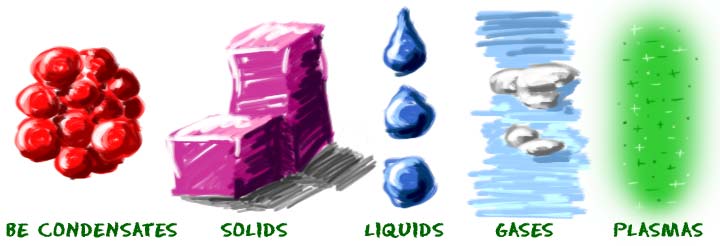

| Microscopic view of a gas. |

Microscopic view of a liquid.
|

| Microscopic view of a solid. |
'Make' or 'Do'?
It can be hard to decide when to use 'make' or 'do' in English. Here's some help.
1: We use 'make' when we create or construct something. For example:
1: We use 'make' when we create or construct something. For example:
- She made a cake.
- I've made us some coffee.
- Did you really make those trousers?
2: We use 'do' for general activities. In this case, 'do' is often used with 'something', 'nothing', 'anything' or 'everything':
- What did you do at the weekend?
- I didn't do anything yesterday.
- She's fed up with doing everything herself. She needs some help.
- Are you doing anything interesting during the holidays?
NOTE: 'What do you do?' means 'what's your job?'
3: There are many, many fixed expressions with 'make' and 'do'. Unfortunately, they don't really follow any useful rules, so you have to learn them. Sorry!
Here's a list: (download this list in PDF).
3: There are many, many fixed expressions with 'make' and 'do'. Unfortunately, they don't really follow any useful rules, so you have to learn them. Sorry!
Here's a list: (download this list in PDF).
- 1. I need to a lot of housework this weekend.
- 2. I've such a mess!
- 3. I haven’t the dishes since Monday!
- 4. Yesterday the sun was shining, so I 4 loads of washing.
- 5. My father enjoys the ironing!
- 6. A: Where's Janet? B: Oh, she’s the beds.
- 7. After every meal she the washing-up.
- 8. Her boyfriend the drying-up.
- 9. Our place looks spotless! We all the cleaning yesterday.
- 10. This carpet is full of crumbs! I’ll have to the vacuuming.
- 11. The furniture is dusty. Could you help me the dusting and polishing please?
- 12. He had a shower, got dressed and then his bed.


понедельник, 10 декабря 2018 г.
понедельник, 3 декабря 2018 г.
Подписаться на:
Сообщения (Atom)